INTERVIEW
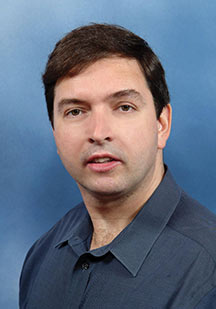
“I’m still a technical trader, but I look for situations where the technicals and fundamentals are in harmony.”
Talking Forex Patterns And Probabilities
FXEducator’s Ed Ponsi
As an experienced professional trader, Ed Ponsi, the president of FXEducator.com, has advised hedge funds, institutional traders, and individuals of all levels of skill and experience. He has made numerous appearances on Cnbc, Cnn, Bbc, Fox, and ForexTV, and his dynamic and humorous style sets him apart from the suit & tie crowd. In addition, Ponsi is the author of Forex Patterns And Probabilities, a top-selling book on currency trading.
Stocks & Commodities Editor Jayanthi Gopalakrishnan and Staff Writer Bruce Faber interviewed Ponsi via telephone on June 8, 2009.
Ed, how did you get started in trading?
My first exposure to trading was with a summer job I held at the Philadelphia exchange (Phlx). It was a clerical job, not on the floor, but it was perfect for a teenager. The trading floor of the Phlx was right down the hall. I didn’t know anything about the markets or trading, but I was close enough that I caught the trading bug. I started reading everything I could get my hands on about the subject. The first book I read was How To Buy Stocks by Louis Engel.
Later, I worked as a musician at night and I owned a business that allowed me to finish work very early during the day, so I had time to trade during market hours. I started trading stocks in the afternoon during the Nasdaq bubble of the 1990s — trading tech stocks out of my basement on an old Compaq using a 14.4K dial-up modem, strictly Level 1. I also had a Quotrek, one of those pre-Pda portable quote devices they used to advertise on Cnbc. So I’d point this device toward the sky, looking for the radio signal that carried the quotes. I remember running down the boardwalk in a beach town in New Jersey, trying to find a pay phone so I could buy 3Com! I was clueless.
The market was very forgiving then — you could buy the wrong stock at the wrong time and it would still go up, so trading was easy, provided you weren’t short. I built up a track record and parlayed that into an entry-level trading job at a Wall Street boutique firm. I think they hired me because I was willing to travel 100 miles to get to work every day. That was when I really learned how to trade.
JG: What attracted you to the forex markets specifically?
I was working as a trader in New York, and someone I used to trade with started trading forex. When he told me about the liquidity, the leverage, and the other advantages of currency trading, I didn’t believe him. Even now, when I talk to stock traders about the advantages of forex, they seem to have a hard time grasping that I’m using 100:1 leverage and collecting interest on the trade at the same time. They are used to paying for everything, including leverage.
The other attraction was the strong trending nature of forex. I was already a trend trader in the stock market, and it only seemed natural that I should take that style and apply it to the market known for long trends.
JG: How do you collect interest using 100:1 leverage?
Stock traders commonly use 2:1, 4:1, and sometimes 10:1 intraday daytrading buying power. Meanwhile, currency traders use 100:1 leverage. Most stock traders consider that to be an insane amount of leverage, but it’s an apples and oranges comparison. If you take for example something like the most liquid currency pair out there, euro/US dollar, it literally moves on average less than two pennies a day. We had to create a whole new subset called pips, which are really almost 1/100th of a penny. So currency traders can make or lose money on a move of a tiny fraction of a penny. If you try to trade currencies without leverage, it would be like trying to trade a stock that only moved a penny a day even if you considered the big rallies. In an entire decade the euro went from $0.85 to $1.60. That is literally $0.75 in a decade.